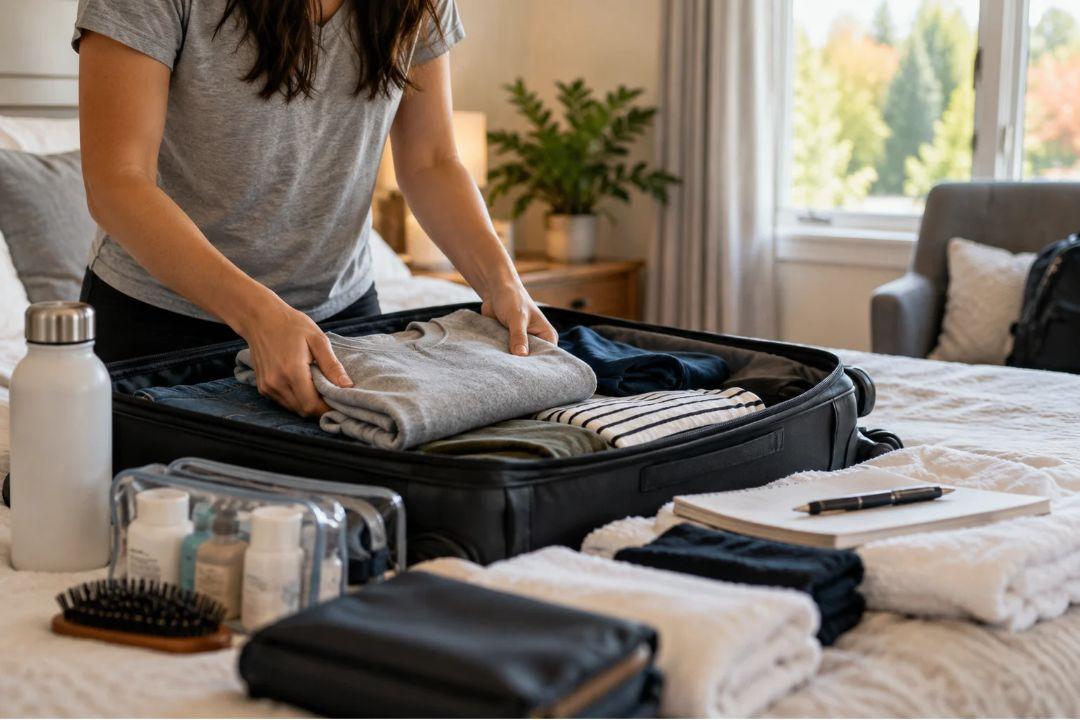
What to pack for rehab is shorter than most people expect: about a week of comfortable clothes, medications in their original pharmacy bottles, photo ID and insurance details, alcohol-free toiletries, and a few comforting personal items. Leave electronics, alcohol, and anything questionable at home, and confirm your final list with the facility before you arrive.
What to Pack for Rehab: The Short List
Pack comfortable clothing, labeled prescriptions, your ID and insurance information, sealed toiletries, and a few personal items such as photos or a journal. Rules differ from one program to the next, so treat this as a starting point.
Packing feels trivial until you are standing in your bedroom at midnight with a half-zipped bag and a pounding heart. A clear packing list for rehab takes one decision off your plate. The sections below cover each category, and the admissions team at The Valley can confirm program details when you call.
What Clothing Should You Bring?
Bring roughly a week of comfortable, layered clothing, plus athletic wear and sturdy shoes. Pick things you can wear all day without thinking about them.
Maryland swings from humid summers to cold winters, so pack for the season you arrive in. A hooded sweatshirt and a light jacket cover most of it. Ask admissions whether any clothing is off limits before you pack your favorite shirts.
Our campus includes a swimming pool, so ask admissions whether swimwear is worth packing. Comfortable shoes matter too. Residential days are full of programming, and flip-flops will not carry you through them.
How Should You Pack Medications and Documents?
Bring every prescription in its original pharmacy bottle with the label intact, plus photo ID, your insurance card, and an emergency contact list. Avoid moving pills into weekly organizers.
Original bottles make it easier for medical staff to verify the drug, dose, and prescriber. Tell staff about everything you take, including over-the-counter products and supplements. Some of them can interact with other medications, and the team can only catch that if they know.
For paperwork, our admission guide explains the ID, insurance, and medical history staff will ask for. If coverage is your open question, how rehab insurance verification works is worth reading first.
Which Toiletries Are Allowed?
Pack basic hygiene products that are alcohol-free, sealed, and free of aerosols and glass. Check labels before you pack, because alcohol hides in more products than people realize.
Mouthwash is the classic surprise. Many versions contain alcohol, as do some hand sanitizers, colognes, and aftershaves. Choose alcohol-free versions and bring travel sizes in plastic bottles. Packing toiletries sealed and unopened can make check-in smoother, since staff may inspect them.
What Comfort Items Should You Bring?
Bring a few things that keep you grounded: family photos, a journal, a book, and a notebook. Keep it small and meaningful.
Write down the phone numbers and mailing addresses of the people you want to reach. Phones are often restricted in residential treatment, and most of us no longer know a single number by heart. A journal also pays off. Our day-by-day look inside residential treatment shows evenings built around reflection and journaling, and many wellness practices can support you between sessions.
What Should You Leave at Home?
Cell phones, laptops, tablets, smartwatches, weapons, alcohol, drugs, and opened over-the-counter medications usually stay home. Confirm each item with admissions, since policies vary.
- Cell phones, laptops, tablets, and smartwatches
- Alcohol, drugs, and anything that smells or looks like either
- Weapons of any kind
- Opened over-the-counter medications
- Valuables you would hate to lose
If leaving your phone is hard because of work, ask about our Professional Program, which is designed for executives and working professionals who need a discreet setting. Planning for coverage at work now is easier than negotiating it from a lobby chair.
How Do You Confirm Your Packing List?
Call admissions before you pack and ask about phones, visitors, medications, and laundry. Five minutes on the phone can prevent a lot of repacking.
Our team is available around the clock at (301) 355-7455, and the contact page also lists email. Programs also differ by track, so that you can read about the men’s residential program or the women’s residential program before your call. If you want the bigger picture of what residential care involves, start with what a residential rehabilitation program is and how it works.
Frequently Asked Questions
Can I bring my phone to rehab?
Probably not. Many residential programs restrict personal electronics and offer scheduled calls on facility phones instead. Ask admissions about the policy before you pack.
Do I need to bring my own medications?
Usually yes. Bring current prescriptions in their original pharmacy bottles and tell admissions about everything you take. They can explain how they handle medications during your stay.
How much clothing should I pack?
A common guideline is about a week of comfortable, layered clothing. Pack for the season, and ask admissions whether laundry access changes that number.
What if I forget something?
Mention it at check-in and ask about your options. Admissions can tell you what is possible.
Ready to Get Prepared?
Call The Valley at (301) 355-7455, email info@thevalleymd.com, or use the contact page to confirm what to pack for rehab before your admission date. You can also review our full list of addiction treatment services before you decide.