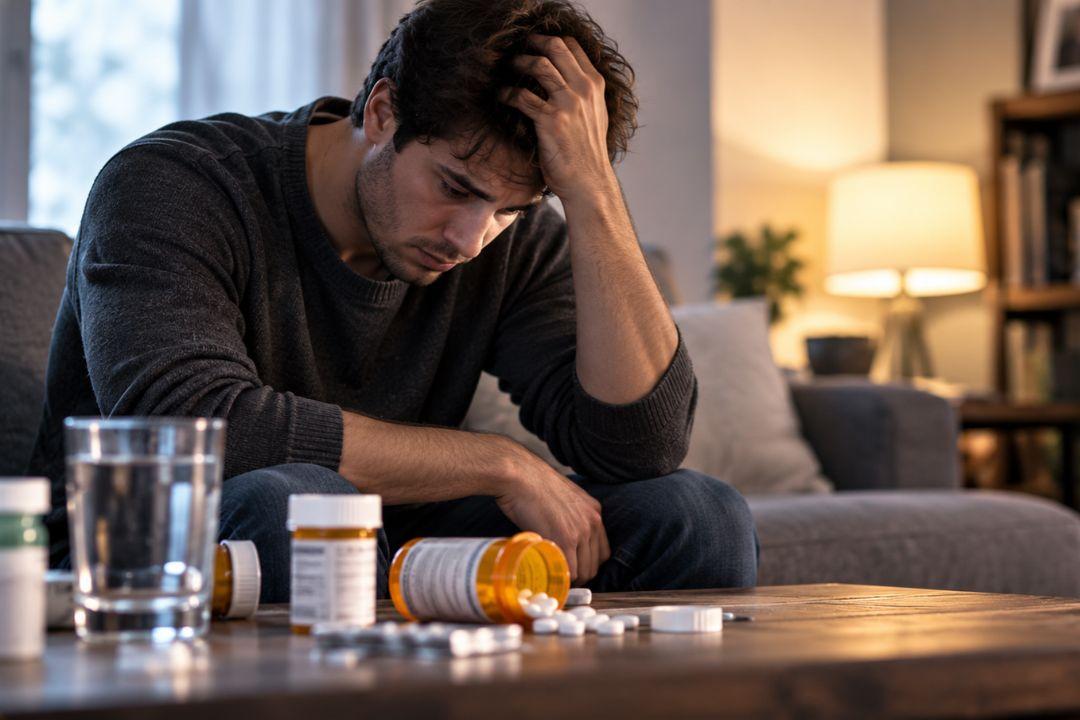
Signs of opioid addiction include taking more than planned, failing to cut back, strong cravings, needing higher doses, and withdrawal when use stops. Missed responsibilities, pulling away from people, and continued use despite harm also count. Only a clinician can diagnose it, but this list can tell you when to ask for help.
What Are the 10 Signs of Opioid Addiction?
These ten signs follow the criteria clinicians use for opioid use disorder, as the CDC lists them. Two or more within a year can point to a problem worth a professional evaluation.
- Taking more, or for longer, than planned. One dose becomes three. A short prescription turns into months.
- Trying to cut back and failing. The person wants to slow down or stop, and the attempts keep falling apart.
- Spending the day around opioids. Getting them, using them, and recovering from them starts to run the schedule.
- Cravings. A strong pull toward the drug that is hard to ignore, even on a good day.
- Needing more for the same effect. This is tolerance. The usual dose stops working the way it used to.
- Withdrawal, or using to avoid it and the sweating, aches, nausea, and anxiety when a dose wears off, or taking opioids to feel normal.
- Missing responsibilities. Work, school, or home duties start slipping.
- Pulling away from people and activities. Friends, hobbies, and family time fade, and relationships strain.
- Using in risky situations. Driving after taking opioids is one common example.
- Continuing despite harm. The person keeps using even after clear damage to their health, mood, or relationships.
How Do Clinicians Decide It Is Opioid Use Disorder?
A clinician diagnoses opioid use disorder when at least 2 of 11 criteria are met within a year. The CDC describes 2 to 3 as mild, 4 to 5 as moderate, and 6 or more as severe. Our list above combines two related criteria into one.
Tolerance and withdrawal do not count when someone takes opioids only as prescribed under medical supervision. That is why physical dependence and addiction are not the same thing. Our guide to prescription drug addiction signs families often miss shows how a legitimate prescription can drift into something else without anyone noticing.
Which Signs of Opioid Addiction Are Physical?
Withdrawal is the clearest physical sign among the signs of opioid addiction. MedlinePlus lists agitation, anxiety, muscle aches, increased tearing, insomnia, a runny nose, sweating, and yawning early on. Later come abdominal cramping, diarrhea, dilated pupils, goosebumps, nausea, and vomiting.
Symptoms usually begin within about 12 hours after the last heroin use, or about 30 hours after the last methadone dose. MedlinePlus calls them very uncomfortable but not life-threatening, and it also warns that withdrawing alone can be very hard and may be dangerous. Our guides to medical detox and the detox symptoms timeline explain what supervised care looks like.
The part people miss comes after. MedlinePlus notes that most opioid overdose deaths happen in people who have just detoxed, because tolerance drops and a much smaller dose can be fatal. Getting through withdrawal is not the finish line.
Which Warning Signs Mean an Overdose Emergency?
Call 911 right away if someone has slow or stopped breathing, pinpoint pupils, bluish lips or fingernails, or cannot be woken. Our page on the opioid and fentanyl epidemic also lists low blood pressure, extreme sleepiness, and confusion.
Fentanyl raises the stakes. It is often mixed into other drugs without the user knowing, so no one can be sure how much opioid they took. Naloxone is a medicine that can reverse an opioid overdose, but it does not replace emergency care. Ask a pharmacist or your local health department how to get and use it.
How Do You Raise the Subject Without Starting a Fight?
Pick a calm, private moment, describe specific things you have seen, and offer to help find an evaluation. Labels like “addict” usually end the conversation before it starts. Our guide on talking to someone about their addiction without pushing them away gives words to start with.
If they say no, you still have options. Read how to help someone who refuses treatment before the next conversation.
What Treatment Is Available at The Valley in Rockville?
The Valley offers residential inpatient treatment in Rockville, Maryland. Our site describes comprehensive diagnosis, individualized treatment plans, therapy, and opioid detoxification for opioid and fentanyl addiction. Confirm the details for your situation with admissions.
MedlinePlus notes that treatment usually combines medicines, counseling, and support, and that most people need ongoing care after detox. Medicines such as methadone and buprenorphine are used in many programs, so ask admissions what applies to you. See what to expect in Maryland rehab for opioid and fentanyl addiction, or learn when inpatient rehab is necessary.
Frequently Asked Questions
Can someone become addicted to opioids they were prescribed?
It can happen. Physical dependence from taking a medicine as directed is different from addiction, which involves the compulsive pattern in the signs above. A prescriber or addiction specialist can determine which is happening.
Should I stop opioids suddenly on my own?
Talk with a health care provider first. MedlinePlus says withdrawing alone can be very hard and may be dangerous, and that treatment usually combines medicines, counseling, and support.
How many signs mean it is time to get help?
There is no magic number. The diagnostic threshold is two criteria within a year, but any sign that worries you is a good enough reason to ask for an evaluation.
What should I do if I think someone is overdosing?
Call 911 right away. If you have naloxone and know how to use it, give it and stay with the person until help arrives.
Ready to Talk to Someone About What You Are Seeing?
Call The Valley at (301) 355-7455, email info@thevalleymd.com, or use the contact page to talk through what you have noticed. These signs of opioid addiction are easy to explain away one at a time, and much harder to ignore together. You can also review our addiction treatment services or how rehab insurance verification works.