Beginning addiction treatment can bring a lot of uncertainty, especially when you do not know what withdrawal will feel like.
Understanding a detox symptoms timeline can make the process feel more manageable and help you recognize why professional support may be important.
Detox is the process of allowing the body to clear alcohol or drugs while withdrawal symptoms are monitored and managed. The experience is different for everyone. The substance used, duration and amount of use, overall health, previous withdrawal experiences, and whether multiple substances are involved can all affect the timeline.
For some people, withdrawal symptoms may be uncomfortable but manageable. For others, withdrawal can become medically serious. Therefore, understanding the timeline can help you in the longer run.
What Is the Typical Detox Symptoms Timeline?
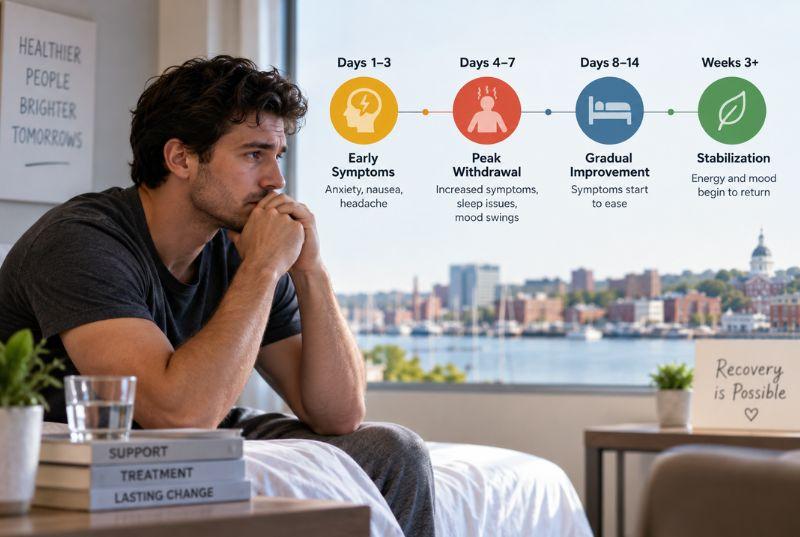
There is no withdrawal schedule for all drugs and everyone. There is a common pattern among withdrawal processes as symptoms start to show once drug intake ceases and get worse before they slowly start to improve.
Detoxification is estimated to take anywhere between a few days to a week, but this could take longer based on the type of drug and the individual's situation. The Valley explains that alcohol detoxification takes about three to seven days.
First 6–24 Hours: Early Withdrawal Symptoms
During the first several hours after stopping alcohol or drugs, some people begin noticing changes in how they feel. Early symptoms can include:
- Anxiety or irritability
- Restlessness
- Sweating
- Headaches
- Shakiness or tremors
- Nausea or stomach discomfort
- Difficulty sleeping
- Changes in appetite
- Strong cravings
The timing depends heavily on the substance. Some drugs leave the body relatively quickly, while others have longer-lasting effects.
Days 1–3: When Withdrawal Symptoms May Intensify
The first few days are often an important part of the detox symptoms timeline because withdrawal may become more noticeable or intense.
Physical symptoms can include sweating, shaking, nausea, vomiting, stomach problems, muscle aches, fatigue, and changes in heart rate. Psychological symptoms may include anxiety, irritability, difficulty concentrating, agitation, or low mood.
Opioid withdrawal, for example, can involve anxiety, insomnia, yawning, sweating, runny nose, goosebumps, muscle aches, restlessness, nausea, vomiting, diarrhea, and abdominal cramps.
Alcohol withdrawal deserves particular caution. In some cases, severe withdrawal can involve seizures, hallucinations, confusion, or delirium tremens. These complications can be life-threatening and require immediate medical attention.
Days 3–7: Symptoms Often Begin to Improve
For many people, the most intense physical withdrawal symptoms begin easing during the later stages of the first week. However, improvement does not necessarily mean that every symptom disappears.
Fatigue, sleep disruption, mood changes, anxiety, and cravings may continue after the initial physical symptoms have subsided. Some individuals may also experience lingering psychological symptoms that require ongoing treatment and support.
How Long Does Drug and Alcohol Withdrawal Last?
The answer depends on the substance and the person.
Alcohol withdrawal may begin within hours of the last drink and can become more severe during the first few days. Opioid withdrawal can cause significant flu-like and gastrointestinal symptoms, while withdrawal from benzodiazepines may require a longer, carefully managed process.
Other substances, including stimulants, may produce a different pattern in which fatigue, sleep changes, depression, irritability, and cravings become more prominent.
Because withdrawal varies so widely, a detox symptoms timeline should be viewed as a general guide rather than a personal prediction. A medical professional can evaluate your substance use history and determine what level of monitoring and treatment is appropriate.
What Factors Affect the Detox Symptoms Timeline?
Several factors can influence how quickly withdrawal begins and how long symptoms last.
Substance and Amount Used
Different substances affect the brain and body in different ways. The amount and frequency of use can also influence withdrawal severity.
Duration of Substance Use
Long-term or heavy use may result in greater physical dependence, potentially making withdrawal more complicated.
Previous Withdrawal Experiences
People who have previously experienced withdrawal may have different risks during subsequent attempts to stop using a substance.
Physical and Mental Health
Existing health conditions and co-occurring mental health concerns can affect treatment needs. The Valley provides dual diagnosis treatment designed to address substance use alongside conditions such as anxiety, depression, and PTSD.
Multiple Substances
Using more than one substance can make withdrawal less predictable and may require more comprehensive medical assessment.
When Should You Seek Emergency Help During Withdrawal
Seek emergency care for symptoms such as:
- Seizures
- Severe confusion
- Hallucinations
- Loss of consciousness
- Severe difficulty breathing
- Chest pain
- Extreme agitation
- Signs of severe dehydration
- Other rapidly worsening or unusual symptoms
Do not assume that severe withdrawal will simply pass. If you are concerned about your safety, seek emergency medical assistance immediately.
What Happens After Detox in Maryland?
Completing detox is an important first step, but recovery continues beyond withdrawal. After stabilization, treatment may transition into a structured residential program where individuals can participate in individual therapy, group counseling, behavioral health services, and relapse-prevention work.
The Valley offers a continuum that can include detox and medical stabilization, residential inpatient rehabilitation, partial hospitalization, intensive outpatient treatment, and aftercare.
This approach allows treatment to focus not only on getting through withdrawal but also on developing the skills and support needed for long-term recovery.
Maryland Addiction Treatment With Personalized Support
If you or someone you love is considering treatment, understanding the detox symptoms timeline can help you take the next step with greater confidence. Professional guidance from The Valley can make withdrawal safer while providing a foundation for the longer recovery process.
FAQs
How long does detox usually take?
Medical detox often lasts several days to about a week, but the duration varies by substance, severity of dependence, health history, and individual response to withdrawal.
What are the first symptoms of withdrawal?
Early withdrawal symptoms may include anxiety, irritability, sweating, headaches, nausea, tremors, restlessness, insomnia, and cravings. The specific symptoms depend on the substance.
When are withdrawal symptoms usually the worst?
For many substances, symptoms become more intense during the first few days after stopping use. However, the timing and severity vary significantly from person to person.
Is detox painful?
Withdrawal can be physically and emotionally uncomfortable, but medical support can help manage symptoms and monitor for complications. The goal of medically supported detox is to make withdrawal as safe and manageable as possible.