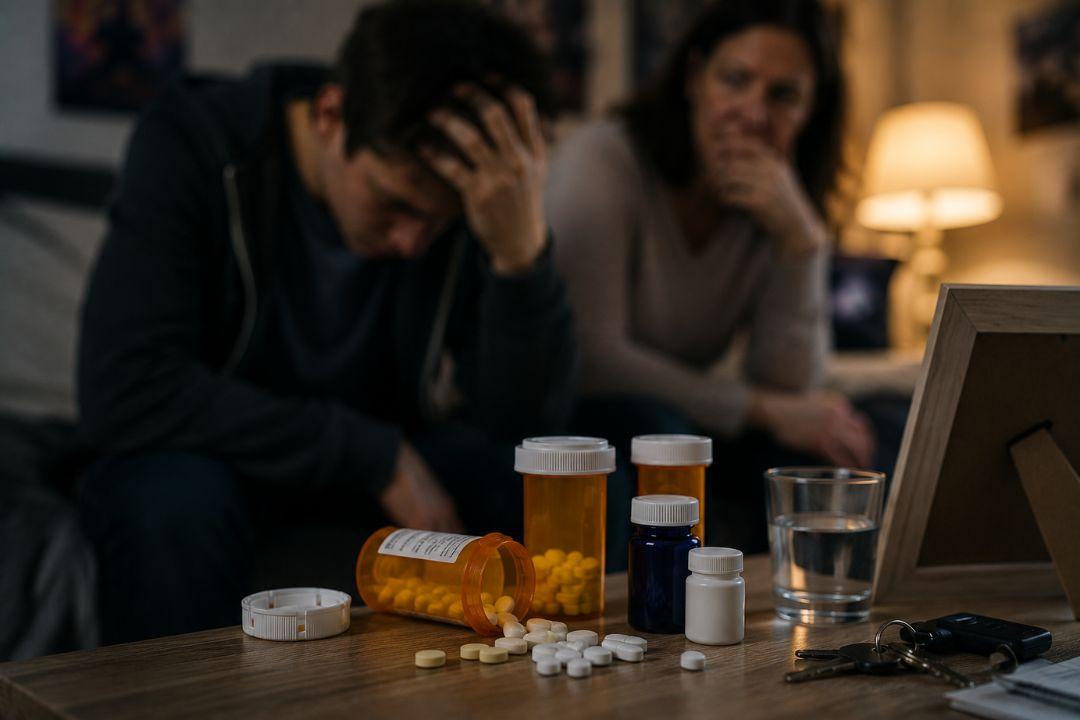
You trust the medicine cabinet. It has a label from a real doctor and pharmacy behind it, so it is easy to assume nothing there could go wrong. That assumption is exactly why prescription drug addiction signs slip past so many families until the situation has already grown serious. We want to change that. By the end of this article, you will know which early warning signals to watch for, why they are so easy to miss, and what a real path back to health looks like when a loved one needs more support than willpower alone can provide.
Why Prescription Drug Addiction Is So Easy to Overlook
Unlike illegal drugs, prescription medications carry a built-in sense of legitimacy. A person taking opioids after surgery, benzodiazepines for anxiety, or stimulants for ADHD is not doing anything wrong on paper, which makes it hard for the family to imagine dependence forming. Add in the shame many feel about struggling with a doctor-prescribed medication, and you get a pattern that hides in plain sight for months or years.
Common Categories of Prescription Drugs Linked to Addiction
Before covering the signs themselves, it helps to know which medications carry the highest risk.
- Opioid painkillers such as oxycodone, hydrocodone, and fentanyl patches
- Benzodiazepines such as Xanax, Ativan, and Klonopin are prescribed for anxiety or sleep
- Stimulants such as Adderall and Ritalin are prescribed for ADHD
- Sleep medications such as Ambien and Lunesta
Early Prescription Drug Addiction Signs Families Often Miss
1. Running Out of Medication Early
If a prescription that should last thirty days is gone in twenty, or a loved one keeps asking for early refills, that is one of the clearest prescription drug addiction signs there is.
2. Doctor Shopping or Pharmacy Switching
Visiting multiple doctors for the same complaint or filling prescriptions at different pharmacies to avoid detection often indicates an effort to obtain more medication than a single provider would approve.
3. Mood or Personality Shifts Tied to Dosing
Watch for a mood that noticeably improves after a dose and then dips into irritability, anxiety, or fatigue as the next dose approaches. This cycle is a strong sign that the body has developed dependence.
4. Using Medication for Reasons Other Than Prescribed
Taking a sleep aid during the day for anxiety, or using a stimulant for energy rather than focus, signals the medication is being used to manage feelings it was never meant to treat.
5. Increased Secrecy Around Medication
Hiding pill bottles, becoming defensive when asked about medication use, or taking doses in private rather than openly are subtle but telling changes.
6. Physical Symptoms That Do Not Match the Prescription
Slurred speech, drowsiness beyond what a dose should cause, unsteady balance, or noticeable weight changes can point toward misuse rather than appropriate use.
7. Continuing Use After the Original Reason Is Gone
If pain has healed, anxiety has stabilized, or the original prescribing reason no longer applies, but use continues or increases, this signal is worth taking seriously.
Why Families Struggle to Recognize These Signs
Families are often looking for dramatic changes, the kind associated with illegal drug use, and prescription drug addiction rarely looks that way at first. The person may still hold a job and attend family gatherings, functioning well enough that concerns feel overblown. Only when the pattern is viewed as a whole, rather than isolated incidents, does the picture become clear. Trust your instincts here. If something feels off about how a loved one relies on their medication, that instinct deserves attention.
What to Do If You Notice These Signs
Start with a calm, private conversation rather than a confrontation. Lead with concern instead of accusation, and be specific about what you have observed rather than making broad statements. If the conversation confirms your concerns, or your loved one is not ready to acknowledge the problem, reaching out to a professional addiction treatment program is the next right step. Many prescription medications, particularly opioids and benzodiazepines, carry real withdrawal risks, so any reduction in use should happen under medical supervision rather than stopping abruptly, similar to what we outline in our guide on benzodiazepine withdrawal symptoms and detox risks.
How The Valley Supports Families Facing Prescription Drug Addiction
At The Valley, set on 15 peaceful acres of farmland in Derwood, Maryland, we understand that prescription drug addiction often comes with a layer of guilt that other substance use does not carry. Our program meets clients where they are, without judgment, through:
- Medically supervised detox to safely manage withdrawal from opioids, benzodiazepines, or other prescription medications
- Individualized therapy that addresses the pain, anxiety, or condition behind the original prescription
- Dual diagnosis care for clients managing addiction alongside a co-occurring mental health condition
- Family-focused support to help loved ones understand addiction and take part in recovery
- A calm, restorative setting with a small number of beds, allowing for genuine individual attention
Recovery from prescription drug addiction is entirely possible, and it often starts the moment a family decides to stop overlooking the signs and start asking direct questions.
Help Your Loved One Take the First Step
Recognizing prescription drug addiction signs early can change the course of your loved one's recovery. If you have noticed these warning signals in someone you care about, do not wait for things to get worse. Contact The Valley today to speak confidentially with our admissions team about treatment options in Derwood, Maryland.
Frequently Asked Questions
1. What are the most common prescription drug addiction signs to watch for?
Running out of medication early, doctor shopping, mood swings tied to dosing, and increased secrecy are among the most common early signs.
2. Can someone be addicted to a medication their doctor prescribed?
Yes. Physical dependence and psychological addiction can develop even when a medication is taken exactly as prescribed, especially with opioids and benzodiazepines.
3. How do I approach a loved one I suspect is misusing prescription medication?
Choose a calm, private moment, focus on specific behaviors you have noticed, and express concern rather than judgment.
4. Is it dangerous to stop a prescription medication suddenly?
For many prescription drugs, especially opioids and benzodiazepines, stopping suddenly can cause serious withdrawal symptoms, so changes should be medically guided.
5. When should a family consider professional treatment for prescription drug addiction?
If early warning signs persist, worsen, or a loved one cannot cut back despite genuine attempts, it is time to consider a structured treatment program.