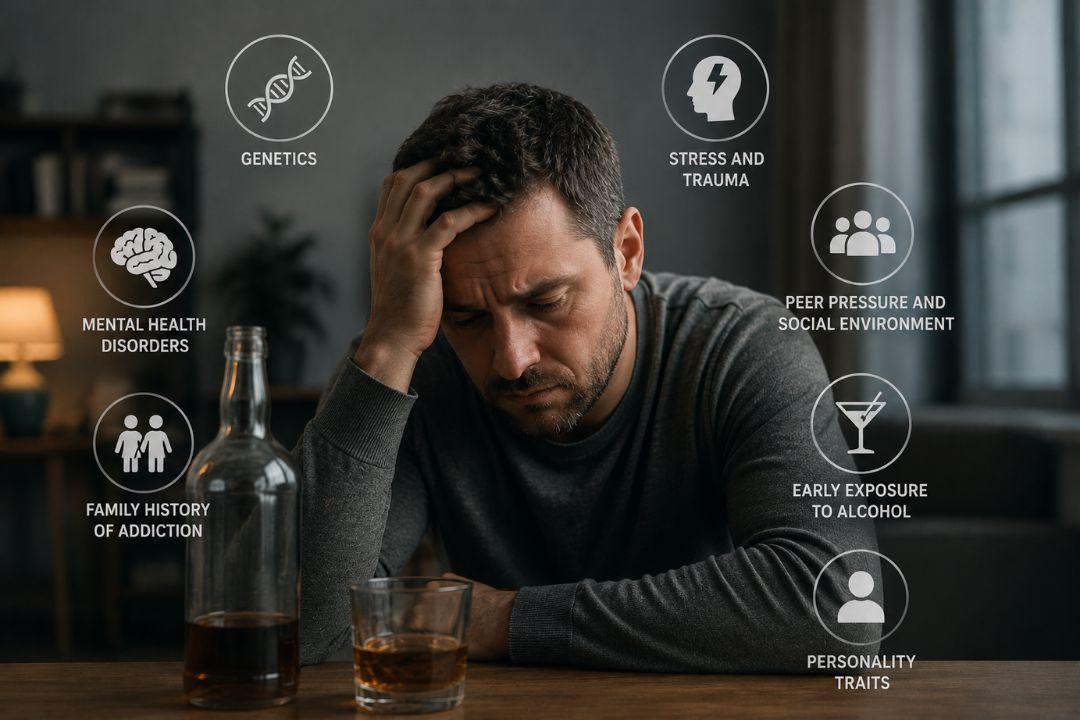
Few myths are as harmful as the idea that alcohol addiction is simply a lack of willpower. If that were true, no one would need treatment, and quitting would be as easy as deciding to stop.
The truth is far more complicated and far more human. So why does someone get addicted to alcohol while another person can take it or leave it? The answer lies in a tangle of biology, psychology, and life circumstances that no one chooses on purpose.
Quick answer: People get addicted to alcohol through a combination of factors: genetics, brain chemistry, mental health, trauma, environment, and the age at which they start drinking. It is rarely about willpower, and no single cause acts alone.
Why Does Someone Get Addicted to Alcohol?
There is no single reason. Addiction takes hold when several forces overlap, and alcohol gradually rewires the brain along the way. Two people can drink the same amount for years, yet one develops a dependence while the other does not. And it is because their biology, history, and circumstances are different. Understanding this helps replace blame with compassion, which is exactly where recovery begins, whether someone is experiencing alcohol dependence or the signs of marijuana addiction.
How Alcohol Affects the Brain
A big part of the answer lies in the brain. Alcohol triggers the release of dopamine, the chemical tied to pleasure and reward, creating a good feeling the brain wants to repeat. With heavy, repeated drinking, the brain adapts: it produces less of its own dopamine, builds tolerance, and starts to rely on alcohol just to feel normal.
Over time, drinking shifts from a choice to a compulsion, and stopping can trigger uncomfortable or even dangerous withdrawal. What often begins as drinking for pleasure slowly becomes drinking for relief, simply to quiet cravings or avoid feeling unwell.
That shift is a hallmark of addiction, and it explains why the habit can feel impossible to break through sheer effort. This is why simply "trying harder" rarely works, and why real treatment addresses the brain and body, not just behavior.
Common Risk Factors for Alcohol Addiction
While anyone can develop a problem, several factors raise the risk. The most significant include:
- Genetics and family history. Research suggests genes account for around half of a person's risk, which is why alcohol addiction often runs in families.
- Mental health conditions. Anxiety, depression, and PTSD frequently coexist with drinking, as many people use alcohol to self-medicate.
- Trauma and adverse childhood experiences. Painful or unstable early years can shape unhealthy coping later in life.
- Environment and social influences. A heavy-drinking culture, peer pressure, easy access, and family attitudes toward alcohol all play a part.
- Age of first use. Starting to drink young is linked to a higher chance of developing dependence later.
- Chronic stress and few coping tools. When alcohol becomes the main way to manage hard feelings, reliance can build quickly.
These factors often stack on top of one another, and the more that are present, the higher the risk. Similar patterns are also seen in the warning signs of cocaine addiction and other substance use disorders.
When Does Drinking Become Addiction?
There is no single switch that flips. Instead, warning signs build gradually. For example, needing more to feel the same effect, drinking to cope with stress, and failed attempts to cut back. It then gradually moves to continuing to drink despite clear harm to health, work, or relationships. Some of these changes can also resemble the early warning signs of prescription drug addiction, especially when substances are used to cope with stress or emotional pain.
If you are wondering whether you or someone you love has crossed that line, our guide on what are the signs of alcohol addiction breaks down the red flags to watch for.
It Is Not a Moral Failing
Understanding why does someone get addicted to alcohol leads to one clear conclusion: it is a health condition, not a character flaw. That distinction matters enormously, because shame is one of the biggest reasons people delay getting help.
Reaching out is not a sign of weakness, it is one of the bravest and smartest things a person can do. A compassionate alcohol rehab Maryland team treats the whole person and the causes underneath the drinking, never just the symptom.
Getting Help Across the DMV
Recovery is more sustainable when care is close to home and family can stay involved, whether you are in Western Maryland, the D.C. suburbs, or Northern Virginia. For families on the Virginia side, our leesburg treatment center offers compassionate, evidence-based care within easy reach.
Take the First Step Toward Healing
Knowing why does someone get addicted to alcohol does not just satisfy curiosity, it opens the door to compassion and to real help. At The Valley, we treat the causes beneath the addiction with personalized, evidence-based care in a calm setting across the DMV.
We're here to help! We're a no-judgment zone, so feel free to come to us with any questions or concerns. Reach out to us today.
Frequently Asked Questions
Why does someone get addicted to alcohol?
It happens through a mix of factors, including genetics, brain chemistry, mental health, trauma, and environment. No single cause is to blame, and the process is rarely about willpower.
Is alcohol addiction genetic?
Partly. Research suggests genes account for roughly half of a person's risk, while environment and life experiences shape the rest. Family history raises the odds but does not guarantee addiction.
Can anyone become addicted to alcohol?
Yes. With enough exposure and the right combination of risk factors, anyone can develop a dependence, though some people are far more vulnerable than others.
Is alcoholism a disease?
Yes. Alcohol use disorder is widely recognized as a chronic medical condition that affects brain function, behavior, and the body's reward system. That is why lasting recovery often requires treatment, support, and ongoing management rather than willpower alone.
Does drinking to cope lead to addiction?
It can. When alcohol becomes a person's primary way of handling stress, anxiety, trauma, or other difficult emotions, the brain can begin to rely on it as a coping mechanism. Over time, that pattern may increase the risk of dependence and make it harder to stop drinking without support.