Maybe you have been taking a prescribed benzodiazepine for anxiety or sleep for months, and now the idea of stopping feels more frightening than the condition it was treating in the first place. That fear makes sense. Benzodiazepine withdrawal symptoms can be intense, unpredictable, and in some cases genuinely dangerous, and no one should have to guess their way through it. We know how overwhelming this stage can feel, and we want you to walk away from this article with a clear picture of what withdrawal actually looks like, why it happens, and how a medically supervised detox can make the process far safer. Below, we will cover the withdrawal timeline, the warning signs that mean you need help right away, and the risks that make going it alone a bad idea.
Why Benzodiazepine Withdrawal Happens
Benzodiazepines work by boosting a calming brain chemical called GABA. Over time, the brain adjusts to the presence of the drug and produces less natural calming activity on its own, leaning on the medication instead. When the drug is stopped or reduced too quickly, the brain is left without enough of its own natural regulation, and it swings into a state of overactivity. That rebound is what causes withdrawal symptoms, and it is also why tapering off benzodiazepines under medical guidance is so important rather than stopping cold turkey.
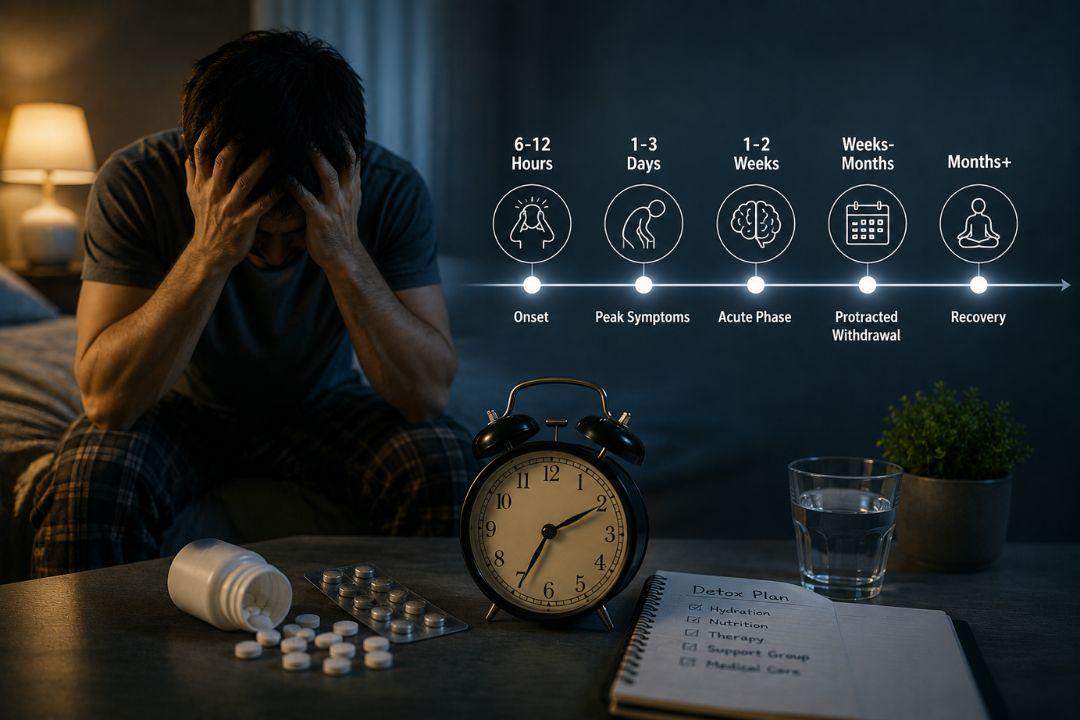
The Benzodiazepine Withdrawal Timeline
Every person's timeline looks a little different depending on the specific medication, dosage, and length of use, but withdrawal generally follows a few recognizable stages.
Early Withdrawal (Day 1 to 4)
Symptoms often begin within hours to a few days after the last dose, especially with shorter-acting benzodiazepines. Early signs typically include:
- Rebound anxiety and restlessness
- Trouble sleeping or vivid dreams
- Irritability and mood swings
- Sweating, rapid heartbeat, or shaky hands
Peak Withdrawal (Day 5 to 14)
This is usually the most intense stretch, when symptoms are at their strongest. It can include:
- Heightened anxiety or panic attacks
- Muscle tension, headaches, and nausea
- Sensitivity to light and sound
- In more severe cases, seizures or hallucinations
Post-Acute Withdrawal (Weeks to Months)
Once the sharpest physical symptoms ease, many people experience a longer stretch of lingering issues, sometimes called post-acute withdrawal syndrome. This phase can bring ongoing anxiety, low mood, sleep disruption, and difficulty concentrating that gradually improve with time and proper support.
Detox Warning Signs That Need Immediate Attention
While mild discomfort is common during benzodiazepine withdrawal, certain symptoms are medical emergencies and should never be managed at home. Seek immediate medical care if you or a loved one experiences:
- Seizures of any kind
- Severe confusion or disorientation
- Hallucinations or delusions
- A dangerously elevated heart rate or blood pressure
- High fever combined with agitation
These symptoms point to a risk of a severe complication that can become life-threatening without prompt treatment, which is exactly why professional detox exists in the first place.
The Real Risks of Quitting Benzodiazepines Without Support
Stopping benzodiazepines abruptly, especially after long-term or high-dose use, carries risks that go far beyond feeling uncomfortable for a few days. Unsupervised withdrawal can lead to seizures, severe psychological distress, and in rare cases, life-threatening complications. Many people also underestimate how long post-acute symptoms can linger, which increases the temptation to relapse just to make the discomfort stop. This is one of the clearest examples of why detox should always happen under professional supervision rather than through a self-managed taper.
Why Medical Detox Makes a Difference
A structured, medically supervised detox is designed specifically to reduce these risks. Here is what that support typically includes:
- Gradual, individualized tapering that respects your specific medication and history, rather than a one-size-fits-all schedule
- Around-the-clock monitoring so that any warning signs are caught and addressed immediately
- Comfort medications to ease symptoms like anxiety, nausea, or insomnia during the process
- A clear transition plan into ongoing residential treatment once detox is complete, so recovery does not stop at the first milestone
At The Valley, our approach mirrors how we support clients through other forms of chemical dependency, including the process we outline in our guide on alcohol detox and treatment timelines. The goal is never just to get through withdrawal, but to set the stage for lasting recovery.
What Recovery Looks Like After Detox
Detox is an essential first step, but it is not the finish line. Once the physical symptoms of benzodiazepine withdrawal have stabilized, real healing continues through therapy that addresses the anxiety, stress, or trauma that may have led to dependence in the first place. At The Valley, set on 15 quiet acres of farmland in Derwood, Maryland, clients move from detox into a structured residential program built around evidence-based therapy, dual diagnosis support, and a calm, low-ratio environment designed to help the nervous system truly reset.
Take the Safest Path Toward Recovery
Benzodiazepine withdrawal symptoms are not something to navigate alone, and you should not have to. If you or someone you love is dependent on benzodiazepines and considering detox, reach out to The Valley today to speak with our admissions team about a safe, medically supervised path toward lasting recovery in Derwood, Maryland.
Frequently Asked Questions
1. How long do benzodiazepine withdrawal symptoms last?
Acute symptoms typically peak within the first one to two weeks, but some people experience lingering post-acute symptoms, like anxiety or sleep trouble, for weeks or months afterward.
2. Can benzodiazepine withdrawal be fatal?
In severe cases, especially with abrupt cessation after long-term or high-dose use, withdrawal can trigger seizures or other complications that can become life-threatening without medical care.
3. Is it safe to taper off benzodiazepines at home?
It is not recommended. A gradual taper should always be guided by a medical professional who can adjust the schedule based on your response and watch for warning signs.
4. What is the difference between acute and post-acute withdrawal?
Acute withdrawal involves the most intense physical symptoms in the first couple of weeks, while post-acute withdrawal refers to milder, longer-lasting psychological symptoms that can persist afterward.
5. Why choose a medical detox program instead of quitting alone?
A medical detox program offers monitoring, comfort medications, and a personalized taper schedule that significantly reduces the risks of severe complications compared to stopping on your own.