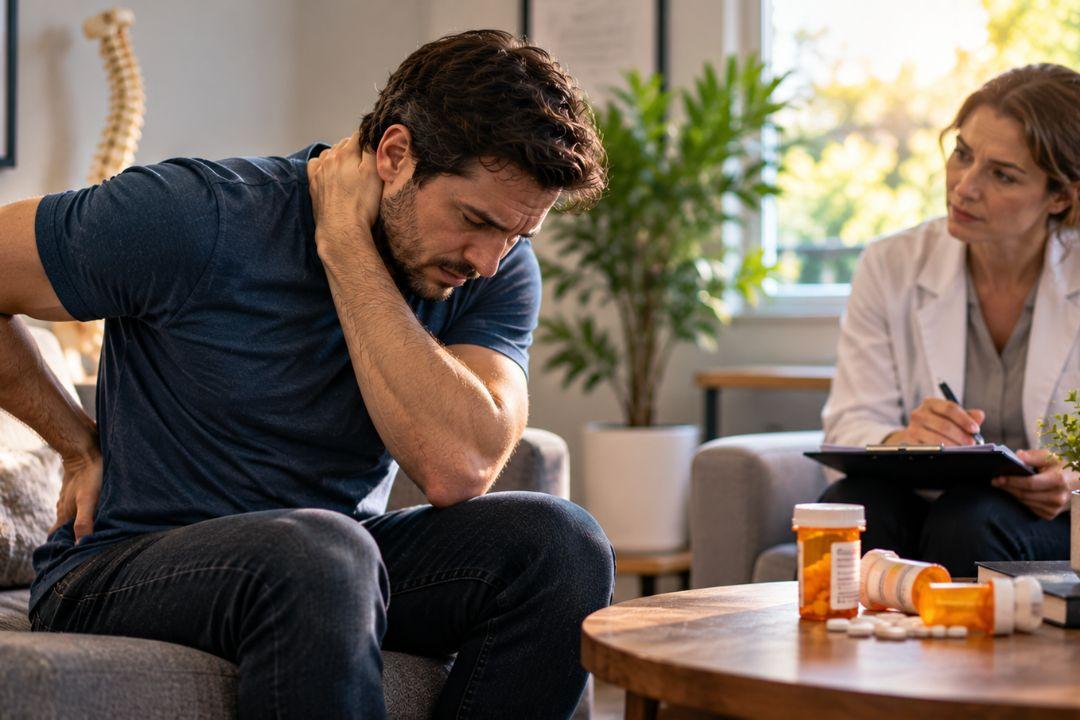
Chronic pain and opioid addiction are linked because long-term opioid use can lead to tolerance, physical dependence, and increased pain sensitivity, which can drive a person to take more. Breaking the cycle safely means working with a medical provider, never stopping suddenly, and treating both the pain and the opioid use.
How Are Chronic Pain and Opioid Addiction Connected?
Opioids can reduce pain in the short term, but long-term use changes how the body responds to them. Those changes can keep a person taking opioids even when the medication is no longer helping much.
The Centers for Disease Control and Prevention (CDC) defines chronic pain as pain lasting more than three months. It lists these risks of prescription opioids:
- Tolerance: needing more medication to get the same pain relief.
- Physical dependence: having withdrawal symptoms when the medication is stopped or reduced.
- Increased pain sensitivity: a side effect that can occur even when opioids are taken as directed.
- Opioid use disorder and overdose: serious risks that come with prescription opioids.
Together, these create a loop. Pain leads to opioids, relief fades as tolerance builds, and missed or reduced doses bring withdrawal. Our article on the opioid and fentanyl epidemic gives more background.
Is Dependence the Same as Addiction?
No. Dependence means feeling withdrawal symptoms when not taking the drug. Addiction is a chronic brain disease that leads a person to keep seeking drugs even though they cause harm.
That distinction comes from MedlinePlus, and it matters for people in pain. Someone who takes opioids exactly as prescribed can become dependent without having an addiction. Opioid use disorder is a problematic pattern of use that causes significant distress and impairment in daily life.
What Are the Warning Signs That Opioid Use Has Become a Problem?
The clearest warning sign is misuse, which means using opioids in a way other than prescribed. Misuse raises the risk of opioid use disorder.
MedlinePlus describes misuse as:
- Taking more than the prescribed dose
- Taking doses more often than prescribed
- Using opioids to get high
- Taking someone else's opioids
MedlinePlus also notes that some people switch from prescription opioids to heroin, which may be cheaper and easier to get. Our guide to prescription drug addiction signs covers the early signals families often miss.
How Can You Break the Cycle Safely?
Start by talking with the provider who prescribes your opioids, and do not stop on your own. A gradual, supervised plan protects you from withdrawal and from uncontrolled pain.
Safety comes first. The CDC's 2022 clinical practice guideline says rapid tapers and abrupt discontinuation have harmed patients. A safe plan usually includes:
- An honest conversation: tell your provider how much you take, how often, and whether the dose still helps.
- A gradual taper, if appropriate: dose changes should be made together with your provider, not forced or rushed.
- Other ways to manage pain: the CDC lists physical therapy, exercise, cognitive behavioral therapy, and nonopioid medications such as acetaminophen, ibuprofen, and certain antidepressant and antiseizure medications.
- Treatment for opioid use disorder: the guideline says clinicians should offer or arrange medication treatment for patients who meet the criteria. MedlinePlus notes these medications are often combined with behavioral therapy and counseling.
- Naloxone at home: it can reverse an opioid overdose if given quickly.
Our guide to medical detox explains when withdrawal needs professional care.
What Does the Research Say, and Where Are Its Limits?
Research supports nonopioid treatment as the preferred approach for chronic pain, but it does not support cutting people off opioids. The right plan depends on the person.
Keep these points in mind:
- Nonopioid therapies are preferred. The CDC guideline states that nonopioid therapies are preferred for subacute and chronic pain. The CDC also says many nonopioid options have been shown to work better with fewer side effects.
- Opioids have limits. The CDC notes that opioids can reduce pain in the short term but will not likely relieve all of a person's pain.
- Tapering carries risk. The guideline says tapering long-term opioids can carry significant risks, particularly when tapers are rapid or patients lack support.
- Pain still needs care. Treating opioid use disorder does not make chronic pain disappear, so both need a plan.
That is a realistic picture of chronic pain and opioid addiction: two conditions that have to be treated together, with medical guidance.
How Does The Valley in Rockville Help With Opioid Addiction?
We provide residential treatment for drug addiction, including opioids, at our Rockville, Maryland campus. Care begins with an assessment of addiction severity and any co-occurring mental health conditions.
Our counseling uses approaches such as cognitive behavioral therapy, motivational interviewing, group support, and family counseling. Read more in our article on holistic counseling for opioid addiction, or see what to expect in rehab for opioid and fentanyl addiction.
If you live with chronic pain, tell admissions before you arrive. Share your diagnosis, current prescriptions, and prescribers, and ask how we manage pain during treatment. Learn more about our Rockville rehab center.
Frequently Asked Questions
Can I become addicted if I take opioids as prescribed?
Prescription opioids carry a risk of opioid use disorder, and the CDC notes side effects can occur even when they are taken as directed. Misuse raises the risk further.
Should I stop taking opioids on my own?
No. Talk with your prescriber first. CDC guidelines warn that abrupt discontinuation has caused patient harm.
What can I use for chronic pain other than opioids?
The CDC lists physical therapy, exercise, cognitive behavioral therapy, and certain nonopioid medications. Your provider can advise which fit your condition.
Does needing a higher dose mean I am addicted?
Not by itself. Tolerance means needing more medication for the same relief. It is a reason to talk with your provider.
Ready to Talk About Opioid Use and Chronic Pain?
Call The Valley at (301) 355-7455, email info@thevalleymd.com, or use our contact page to talk with admissions about your situation. Chronic pain and opioid addiction can be addressed together, and our team can help with insurance verification and the right level of care. You can also review our addiction treatment services.