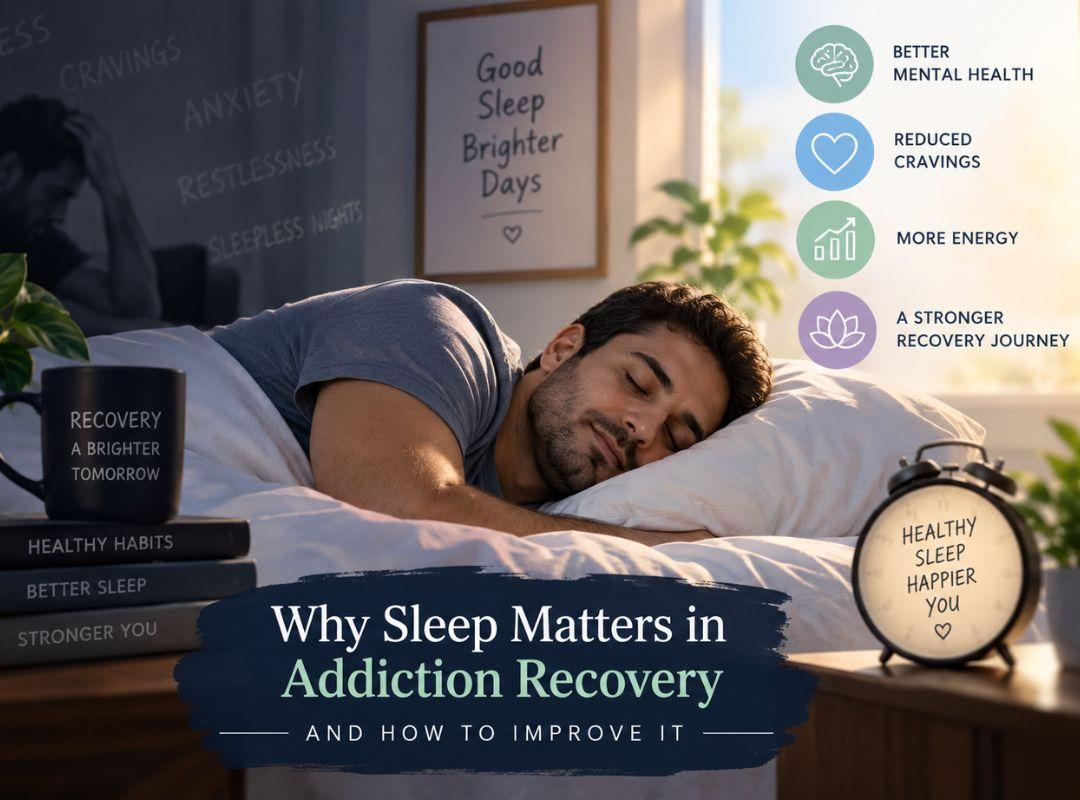
Recovery from drug or alcohol addiction involves much more than stopping substance use. The body and brain need time to heal, routines need to be rebuilt, and healthy coping skills need to become part of everyday life. One often-overlooked part of that process is sleep.
For many people in early recovery, falling asleep, staying asleep, or waking up feeling rested can be difficult. Withdrawal, stress, cravings, anxiety, disrupted routines, and changes in brain chemistry can all contribute to sleep problems. In turn, poor sleep can make it harder to manage emotions, concentrate, handle stress, and maintain healthy recovery habits.
Understanding the connection between sleep and addiction recovery can help people treat rest as an important part of their overall recovery plan.
Why Is Sleep Important During Addiction Recovery?
Sleep gives the body and brain an opportunity to recover. During quality sleep, the body supports important processes related to physical restoration, memory, emotional regulation, and cognitive functioning.
These functions matter during addiction recovery because individuals are often learning new behaviors while managing stress, cravings, and difficult emotions. Being consistently exhausted can make those challenges feel even more difficult.
Sleep problems are also common among people with alcohol use disorder. According to the National Institute on Alcohol Abuse and Alcoholism (NIAAA), sleep disorders frequently occur alongside alcohol use disorder, and sleep disturbances can continue during periods of abstinence.
This does not mean that one poor night of sleep will cause a relapse. Rather, ongoing sleep disruption can become another challenge that needs attention as part of comprehensive recovery.
How Does Addiction Affect Sleep?
Substance use can interfere with normal sleep patterns in several ways. Some substances may initially make a person feel sleepy, creating the impression that they help with sleep. However, sedation is not the same as restorative sleep.
Alcohol can change normal sleep physiology and contribute to fragmented sleep and earlier waking. NIAAA notes that alcohol can reduce certain stages of sleep and aggravate sleep-related breathing problems.
Withdrawal can also disrupt sleep. Trouble sleeping, restlessness, anxiety, and other uncomfortable symptoms may occur when someone stops using certain substances. For people recovering from alcohol use disorder, insomnia can be part of withdrawal and may sometimes persist beyond the initial withdrawal period.
Can Poor Sleep Increase the Risk of Relapse?
Sleep problems do not automatically lead to relapse, but they can make recovery more challenging.
When someone is exhausted, they may have less patience, reduced concentration, and greater difficulty managing stress. Emotional regulation can also become harder. These factors matter because recovery often requires individuals to respond to cravings, triggers, interpersonal conflicts, and stressful situations without returning to substance use.
How to Improve Sleep During Addiction Recovery
Improving sleep does not always happen overnight. The goal is to create consistent habits that gradually help the body establish a healthier sleep-wake rhythm.
Keep a Consistent Sleep Schedule
Try to go to bed and wake up at approximately the same time every day, including weekends. A predictable schedule can help reinforce the body's natural sleep-wake cycle.
Create a Calming Bedtime Routine
Give yourself time to transition from daytime activities to sleep. Reading, gentle stretching, relaxation exercises, or taking a warm shower can help create a consistent signal that the day is winding down.
Limit Caffeine and Nicotine in the Evening
Caffeine can remain active in the body for hours and may make it harder to fall asleep. Nicotine can also interfere with sleep.
Make the Bedroom Sleep-Friendly
A comfortable sleep environment can make a meaningful difference. Keep the room dark, quiet, and at a comfortable temperature. Try to reserve the bed primarily for sleep rather than work, financial tasks, or other stressful activities.
Get Daytime Activity and Natural Light
Regular physical activity can support healthy sleep, while exposure to natural light during the day can help reinforce the body's sleep-wake rhythm.
Be Careful With Naps
Long or late-afternoon naps may make nighttime sleep more difficult. If you need to nap, keeping it short and earlier in the day may be more helpful.
Talk to Your Treatment Team About Persistent Insomnia
Sleep problems that continue to interfere significantly with daily functioning deserve professional attention. Insomnia can have multiple causes, including withdrawal, anxiety, depression, trauma, medication effects, sleep apnea, and other medical conditions.
A treatment professional can help determine whether additional evaluation or evidence-based treatment is appropriate.
Why Sleep Should Be Part of a Whole-Person Recovery Plan
Addiction recovery is not simply about avoiding substances. It also involves rebuilding physical health, emotional stability, daily routines, relationships, and coping skills.
That is why sleep and addiction addiction recovery should be considered together. Better sleep may make it easier to participate in therapy, think clearly, manage stress, maintain routines, and respond to cravings in healthier ways.
The important point is not to become discouraged by a few difficult nights. Recovery is a process, and sleep can improve as the body adjusts and healthier routines become established.
How The Valley Supports Addiction Recovery in Maryland
Sleep concerns can be especially important during addiction treatment because withdrawal, stress, and mental health challenges may affect rest. If you or someone you love is looking for structured addiction treatment in Maryland, The Valley provides personalized residential care designed to support long-term recovery in a peaceful and supportive environment.
FAQs
How much sleep should someone in addiction recovery get?
Most adults generally need around seven to nine hours of sleep per night, although individual needs vary. The quality and consistency of sleep are also important.
Is insomnia normal during addiction recovery?
Sleep problems can occur during withdrawal and early recovery, particularly with alcohol and some other substances. Persistent insomnia should be discussed with a healthcare or addiction treatment professional rather than ignored.
Can better sleep help prevent relapse?
Better sleep does not guarantee relapse prevention, but healthy sleep can support emotional regulation, concentration, stress management, and overall well-being—all of which are important recovery skills.
Should I take sleep medication during recovery?
Do not start, stop, or change sleep medication without discussing it with a qualified healthcare professional. Some medications may carry risks for people with a history of substance use.