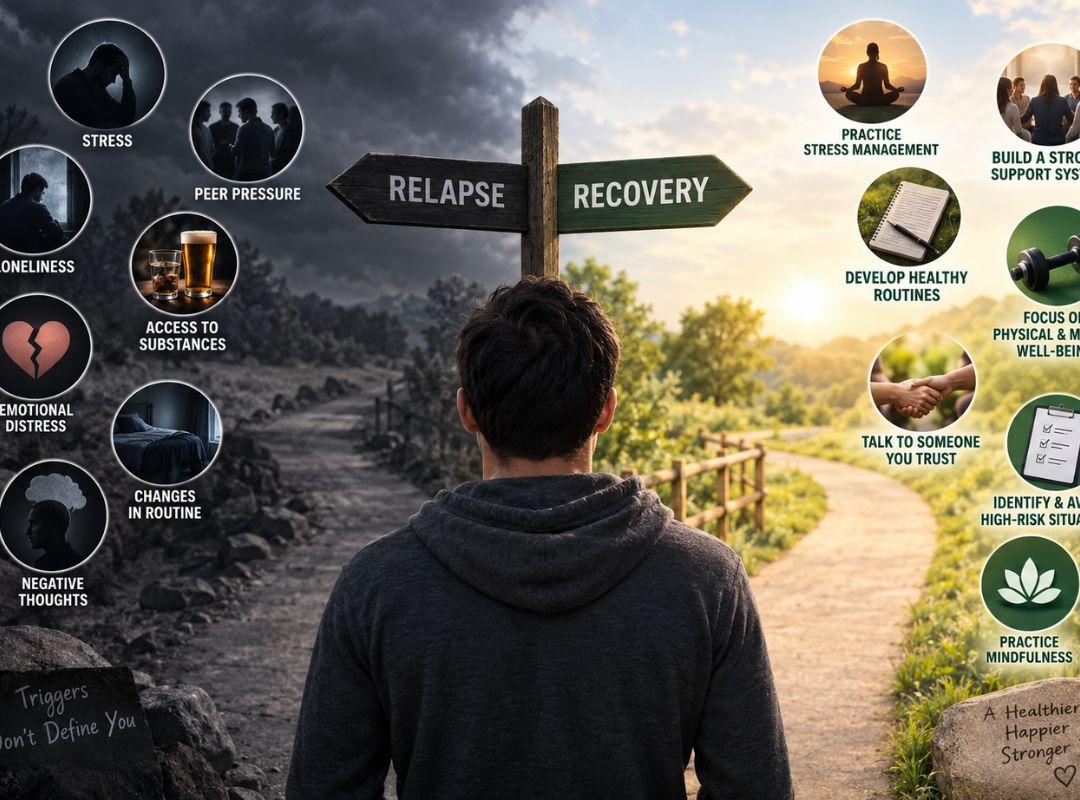
Recovery from addiction is not simply about stopping substance use. It is also about learning how to handle the people, situations, emotions, and thoughts that may create a desire to use again.
Understanding how to triggers for addiction relapse can help people in recovery recognize risks early and develop healthier ways to respond.
Relapse does not mean that recovery has failed. Addiction is a chronic condition, and setbacks can happen. What matters is recognizing warning signs, seeking support, and returning to a recovery plan as quickly as possible. Identifying personal triggers is an important part of building long-term stability.
What Are Addiction Relapse Triggers?
A relapse trigger is anything that makes you want to use drugs. Triggers can be external, such as being around people or places that remind you of a time when you used substances, or internal, such as stress, loneliness, anger, or hard memories.
Different people have different triggers. Some may have a difficult time after an argument with a family member, while others may experience cravings upon returning to a neighborhood where they used to use substances.
Knowing your own triggers will enable you to anticipate difficult situations instead of being blindsided.
Common Triggers for Addiction Relapse
Stress and Emotional Pressure
Stress is one of the most common relapse risks. Work problems, financial concerns, relationship conflicts, or major life changes can create emotional pressure that makes old coping habits seem appealing.
How to manage it: Build healthy stress-management habits into your daily routine. Exercise, breathing exercises, journaling, meditation, therapy, and regular sleep can help. When stress becomes overwhelming, reaching out to a counselor or trusted support person is often better than trying to handle it alone.
People, Places, and Situations Connected to Substance Use
Returning to an old environment can bring back memories and associations connected to substance use. This might include certain friends, bars, parties, neighborhoods, or social situations.
How to manage it: Identify high-risk environments before encountering them. You may need to temporarily avoid certain people or places while strengthening your recovery foundation. Changing routines and surroundings can be an important part of relapse prevention.
Negative Emotions
Anger, sadness, loneliness, shame, anxiety, and frustration can all increase vulnerability to relapse. For someone who previously used substances to escape uncomfortable feelings, emotional distress may create a strong temptation to return to old behaviors.
How to manage it: Instead of trying to suppress difficult emotions, learn healthier ways to process them. Individual therapy, group counseling, mindfulness, physical activity, and talking with someone you trust can provide healthier outlets.
Social Pressure
Friends, coworkers, or acquaintances may encourage drinking or drug use, even when they know someone is in recovery. Social gatherings where substances are present can also create temptation.
How to manage it: Practice saying no before entering a high-risk situation. Let supportive people know about your recovery goals and choose social activities where substance use is not the focus.
Celebrations and Positive Emotions
Triggers are not always negative. Weddings, birthdays, vacations, promotions, or other celebrations may involve alcohol or drugs and can create unexpected temptation.
How to manage it: Plan ahead. Decide what you will do if substances are offered, bring a supportive friend, and have an exit plan if the environment becomes uncomfortable.
Physical Discomfort, Fatigue, or Poor Self-Care
Being hungry, exhausted, physically uncomfortable, or emotionally drained can make it harder to manage cravings and make thoughtful decisions.
How to manage it: Pay attention to basic self-care. Regular meals, adequate sleep, physical activity, and appropriate medical care can support overall well-being during recovery.
How to Build a Relapse Prevention Plan
Knowing your triggers is only the first step. A practical relapse prevention plan should identify what you will do when a trigger appears.
Start by making a list of your most common triggers and early warning signs. Then write down specific responses for each one. For example:
- Leave a high-risk environment.
- Call a trusted friend, counselor, or sponsor.
- Attend a support meeting.
- Practice a healthy coping activity.
- Delay acting on the craving and give yourself time to reassess.
- Return to your treatment or aftercare plan if cravings become difficult to manage.
The goal is to create a plan that you can use when emotions are high and decision-making becomes more difficult.
What to Do If You Experience a Relapse
A relapse should be treated as a signal to seek help, not as proof that recovery is impossible. Continuing to use after a setback can increase risks, so contacting a treatment professional as soon as possible is important.
Talk honestly with your treatment team or another trusted recovery professional about what happened. Review the trigger that contributed to the relapse and determine what changes may strengthen your recovery plan.
Get Support for Long-Term Addiction Recovery
The Valley® is a residential addiction treatment center in Rockville, Maryland, serving people seeking support for alcohol addiction, drug dependency, and co-occurring mental health conditions treatment
If you or someone you love is struggling with addiction or facing repeated relapse, professional treatment can provide the structure, clinical support, and coping tools needed to move forward. Contact The Valley to learn more about available addiction treatment options in Rockville, Maryland.
Frequently Asked Questions
What is the most common trigger for addiction relapse?
Stress, difficult emotions, social pressure, and exposure to people or environments associated with past substance use are common relapse triggers. Individual triggers vary from person to person.
Can avoiding triggers prevent relapse?
Avoiding high-risk triggers can be helpful, particularly during early recovery. However, long-term recovery also involves learning healthy ways to manage unavoidable stress, emotions, cravings, and challenging situations.
What should I do when I experience a strong craving?
Leave the triggering environment if possible, contact someone in your support network, use a healthy coping strategy, and give yourself time before making any decision. If cravings become difficult to manage, contact a treatment professional.
Does relapse mean addiction treatment failed?
No. A relapse can be a sign that a recovery plan needs to be re-evaluated or strengthened. Getting back into professional support as quickly as possible can help reduce further risk and determine what led to the setback.