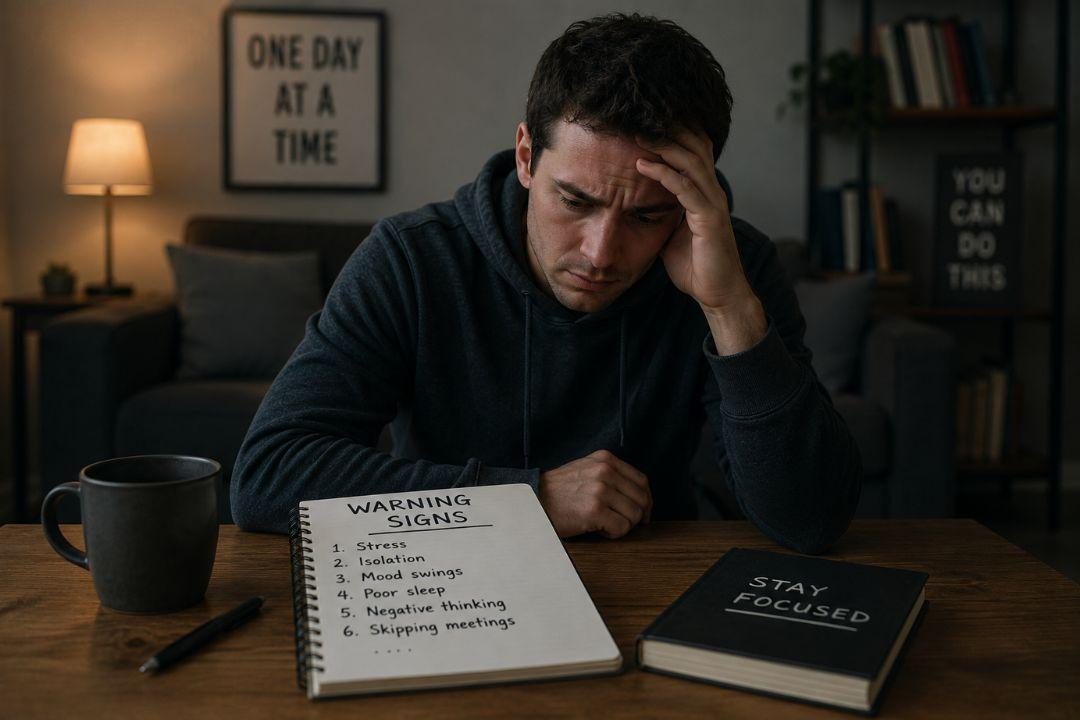
Relapse rarely happens in a single moment. It usually builds gradually, through small shifts in mood, thinking, and behavior that are easy to dismiss until substance use has already returned. Learning to recognize relapse warning signsearly gives someone the chance to intervene long before that final step actually happens.
Understanding the Three Stages of Relapse
Addiction specialists often describe relapse as a process that unfolds in three overlapping stages: emotional, mental, and physical. Substance use itself is usually the last stage, not the first, which means warning signs typically appear well in advance for those who know what to look for.
Recognizing where someone falls within these stages can make the difference between a quiet course correction and a full return to substance use.
Not everyone moves through these stages in a straight line, and some people cycle back and forth between emotional and mental relapse before either stabilizing or progressing further. Knowing this pattern exists helps take some of the panic out of noticing a warning sign, since early recognition is genuinely a point of leverage rather than a sign that things are already out of control.
Emotional Relapse: Signs 1 Through 4
During emotional relapse, a person is not consciously thinking about using substances, but their emotions and behaviors are quietly setting the stage for it.
1. Bottling up emotions instead of talking about them. Withdrawing from honest conversation, even with supportive people, often signals a return to old coping patterns.
2. Isolating from support systems. Skipping meetings, avoiding calls from a sponsor, or pulling away from family are common early indicators.
3. Poor self-care habits. Neglecting sleep, meals, or basic routines often reflects deeper emotional strain beneath the surface.
4. Mood swings and increased irritability. Sudden shifts in temperament, especially anger or anxiety that feels disproportionate, frequently mark the start of this stage.
Mental Relapse: Signs 5 Through 8
Mental relapse involves an internal tug-of-war, where part of the person wants to stay sober while another part starts romanticizing substance use.
5. Cravings that feel more frequent or intense. These urges often resurface even after a long period of stability, especially during stress.
6. Romanticizing past substance use. Remembering only the positive parts of using, while minimizing the consequences, is one of the clearest early signs of relapse in recovery.
7. Thinking about people, places, or situations tied to past use. Mentally revisiting old routines or relationships connected to substance use often precedes actual contact with them.
8. Bargaining or minimizing risk. Thoughts like believing one drink or one use would not really matter often signal that mental relapse is well underway.
Physical Relapse: Signs 9 Through 12
Physical relapse is the final stage, where thinking gives way to action. By this point, intervention becomes more urgent.
9. Seeking out access to substances. This might include reconnecting with old contacts or visiting locations associated with past use.
10. Lying about whereabouts or activities. Increased secrecy, especially involving time that cannot be accounted for, often points to substance use that has already resumed or is about to.
11. Sudden behavioral changes that mirror past patterns. Family members frequently recognize this stage because it resembles behavior they remember from before treatment.
12. Actual substance use. This is the final, unmistakable sign, though by the time it appears, several earlier warning signs have usually already gone unaddressed.
What to Do When You Notice These Warning Signs
Recognizing a warning sign is only useful if it leads to action. Reaching out to a therapist, sponsor, or support group at the first sign of emotional relapse is far more effective than waiting until physical relapse has already occurred.
Families and loved ones can also play a role by gently naming what they observe rather than staying silent out of fear of overreacting. A direct, caring conversation during emotional or mental relapse can interrupt the pattern before it reaches the final stage.
For those actively in recovery, revisiting a relapse prevention plan at the first sign of emotional withdrawal or increased cravings often provides the structure needed to course-correct before things escalate further.
It can also help to keep a simple mental checklist of these twelve signs somewhere easy to recall, whether written down or discussed regularly with a therapist. Familiarity with the pattern makes it far easier to notice in real time, rather than only recognizing it in hindsight after a setback has already occurred.
Frequently Asked Questions
Does noticing a warning sign always mean relapse is inevitable?
No, recognizing early warning signs actually increases the chance of preventing relapse through timely support and intervention.
Can someone experience mental relapse without ever using substances again?
Yes, many people work through mental relapse and return to stability without physical relapse ever occurring.
Is relapse a sign that treatment failed?
No, relapse is often part of the recovery process and does not erase the progress already made in treatment.
How should family members respond if they notice warning signs?
Approaching the conversation with concern rather than accusation tends to open the door to honest dialogue and support.
What should someone do immediately after a physical relapse occurs?
Reaching out to a treatment provider or support network right away is the most effective next step after any relapse.
Catching the Signs Before They Become a Setback
Relapse rarely arrives without warning, even when it feels sudden in the moment. By understanding the emotional, mental, and physical stages that typically come first, individuals and families gain a real opportunity to intervene early rather than reacting after the fact. If you are noticing any of these signs in yourself or someone you love, reach out to a treatment provider now rather than waiting for the situation to become more urgent.