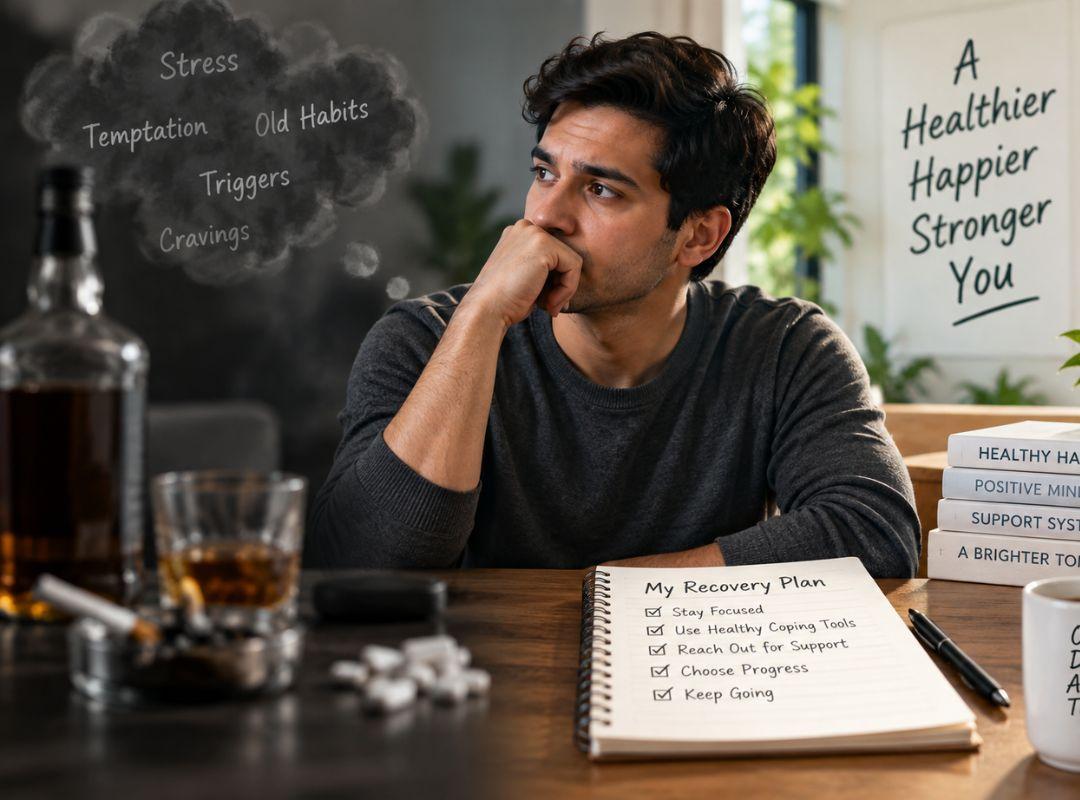
Addiction recovery is more than just quitting the use of substances.
Addiction recovery also involves learning how to react when challenging emotional states, memories, environments, or circumstances trigger the urge to use. The urge to start your recovery journey may be strong at the beginning, but having an urge does not necessarily mean you will experience a relapse.
Understanding cravings in addiction recovery can help you recognize what is happening and respond before an urge turns into substance use.
With the right coping strategies, support system, and treatment plan, cravings can become more manageable over time.
What Causes Cravings During Addiction Recovery?
Cravings are strong urges to use alcohol or drugs. They can be triggered by both internal and external factors. Common triggers include:
- Being around people or places associated with past substance use
- Stress, anxiety, anger, loneliness, or sadness
- Certain sounds, smells, memories, or routines
- Social situations involving alcohol or drugs
- Relationship conflicts
- Celebrations or other emotionally intense events
- Physical or emotional exhaustion
- Overconfidence about being able to use “just once”
Cravings can also appear unexpectedly. Recognizing personal triggers is an important part of relapse prevention
How to Manage Cravings in Addiction Recovery
There is no single technique that works for everyone. Effective craving management often involves combining several strategies.
Identify Your Triggers
Start by paying attention to when cravings occur. Keeping a recovery journal can help you identify patterns. Ask yourself:
- What was happening before the craving started?
- Where was I?
- Who was I with?
- What emotions was I experiencing?
- What thoughts did I have?
Delay Acting on the Craving
A craving can feel urgent, but you do not have to act on it immediately. Give yourself time before making any decision. Tell yourself that you will wait, change your environment, contact someone you trust, or engage in another activity before doing anything else.
The goal is to create space between the craving and your response. Even a short delay can give you an opportunity to use healthier coping skills.
Change Your Environment
If you are somewhere that makes using substances more tempting, leave when it is safe to do so.
Go for a walk, visit a supportive friend, attend a recovery meeting, or move to a calm and substance-free environment. Removing yourself from a trigger can make it easier to regain control.
Use Healthy Distractions
A healthy distraction can redirect your attention while the craving passes. Depending on your interests and recovery plan, you might:
- Exercise or take a walk
- Listen to music
- Cook a healthy meal
- Call someone supportive
- Practice breathing exercises
- Read or journal
- Work on a hobby
- Spend time outdoors
Distraction should not be used to avoid difficult emotions permanently. Instead, it can provide enough time and emotional space to respond to the craving in a healthier way.
Talk to Someone You Trust
Isolation can make cravings harder to manage. Having people you can contact when an urge becomes difficult can provide accountability and emotional support.
Your support network may include a therapist, sponsor, recovery peer, family member, friend, or treatment professional.
Do not wait until a craving becomes overwhelming before asking for help. Building a support system in advance gives you people to turn to when you need them.
Address Stress and Mental Health
Stress and untreated mental health concerns can contribute to substance use and relapse. For some people, cravings may become stronger when they are dealing with anxiety, depression, trauma, or other emotional difficulties.
Addressing these issues alongside addiction can support more sustainable recovery.
Create a Relapse Prevention Plan Before Cravings Hit
One of the best ways to manage cravings in addiction recovery is to prepare for them before they happen. A personal relapse prevention plan can include:
- Your most common triggers
- Warning signs that your recovery may be becoming unstable
- Healthy activities you can use to manage cravings
- People you can contact for immediate support
- Places or situations you should avoid
- Treatment professionals you can reach out to
- Steps to take if you feel close to relapse
When Should You Seek Professional Help for Cravings?
Occasional cravings can occur during recovery, but you should consider additional professional support if urges are becoming frequent, intense, or difficult to control.
Professional treatment may be especially important if you are:
- Thinking about returning to regular substance use
- Frequently exposed to high-risk environments
- Struggling with co-occurring mental health symptoms
- Experiencing repeated relapse
- Having difficulty maintaining daily responsibilities
- Feeling unable to manage cravings independently
Depending on your needs, treatment may include residential care, outpatient treatment, therapy, medication management, relapse prevention, and ongoing aftercare. The appropriate level of care should be determined through a professional clinical assessment.
How The Valley Supports Addiction Recovery
If cravings are becoming difficult to manage alone, reaching out for professional guidance can be an important step toward protecting your recovery. The Valley admissions team is available 24/7 to discuss treatment options and help determine an appropriate level of care.
FAQs
Are cravings normal during addiction recovery?
Yes. There are cravings during recovery, especially for individuals who face circumstances or emotions related to their past drug abuse. Craving does not necessarily mean that the person is going to relapse.
How long do cravings last in recovery?
The duration and intensity of cravings vary from person to person. Some may pass relatively quickly, while others can feel more persistent. Learning personal triggers and using coping strategies can make cravings easier to manage.
What is the best way to stop a craving?
There are several approaches to stop cravings. These include procrastination, avoidance of trigger sites, contact with a support individual, healthy distraction, and use of strategies developed during therapy.
Can stress cause cravings?
Yes. Stress can be an important trigger for substance use and cravings. Learning healthier ways to manage stress and addressing underlying mental health concerns can support long-term recovery.