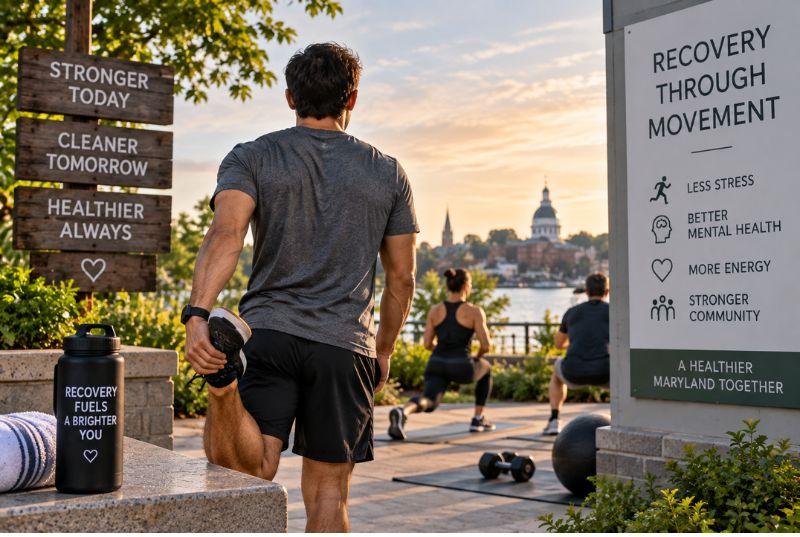
Addiction changes the body just as much as it changes the mind, and healing has to work on both fronts at once. That is why exercise in addiction recovery has become a standard part of clinical treatment rather than an optional extra.
Many Maryland rehabilitation programs now incorporate structured movement as part of the daily routine. This is because movement aids in the repairing of the brain chemistry that has been affected by substances while also providing a tool that can continue to be used after the end of treatment.
Any person conducting research on the various treatment methods in Maryland needs to know how movement is incorporated in the therapy for effective treatment.
Why Exercise in Addiction Recovery Works for your Brain?
The mechanism of substance use disorder involves altering the brain’s systems of dopamine and endorphins, the same mechanisms that give us the sense of satisfaction and relaxation. Physical exercise in the recovery process from addiction utilizes the same mechanisms in a healthy way. It releases endorphins, balances out the amount of dopamine, and reduces cortisol, the stress hormone.
Clinically this is important due to the fact that addictions often arise from being under stress or feeling depressed. If clients has an outlet in which they experience a real, drug-free high, the temptation to turn to something else is lessened. With continued movement over several weeks, clients report improved clarity of thought, more restful sleep, and less powerful cravings.
Physical Benefits That Support the Recovery Process
Years of substance use take a toll on the body, and rebuilding physical health is part of rebuilding a life. Regular movement during treatment supports:
- Restored sleep cycles, which are often severely disrupted by drug or alcohol use
- Improved cardiovascular health and circulation
- Rebuilt muscle tone and physical stamina
- Better appetite regulation and digestion
- Faster clearance of toxins through improved circulation and organ function
These physical gains give clients visible, measurable proof that their bodies are healing, which reinforces motivation to stay the course.
Mental and Emotional Benefits of Staying Active in Addiction Treatment
The emotional struggle in the initial stages of addiction recovery is stronger than most people imagine. There will be feelings of guilt, anxiety, and depression. Exercise in addiction recovery is a tangible method that individuals can use for dealing with such emotions rather than going through them on their own. It gives the client a healthy activity to fill their newfound spare time.
In particular, the group fitness classes have social components incorporated into the process of healing. Exercising with other people who are undergoing treatment together creates an element of teamwork and accountability that is hard to achieve in talk therapy alone. This is why most of the Maryland residential treatment centers incorporate both approaches into their programs, not preferring one to the other.
Types of Movement Used in Maryland Addiction Treatment Programs
Not every client needs or wants an intense workout, and effective programs recognize that. Common formats include:
- Yoga, which builds mindfulness and body awareness while lowering anxiety
- Walking and hiking, especially valuable on campuses set in natural surroundings
- Strength training, which rebuilds physical confidence and discipline
- Group fitness classes, which combine exercise with peer support
- Swimming, a low-impact option that supports joints strained by years of substance use
Movement as Relapse Prevention, Not Just a Wellness Perk
You must have read articles on "exercise feels good." What gets left out is how movement functions specifically as a relapse-prevention tool after discharge. Cravings do not end when residential treatment does, and the coping skills clients rely on in the first year after leaving a program matter as much as anything learned during their stay.
A client that finishes therapy with an active lifestyle, whether it be through exercise or simply walking, has a tangible resource to fall back on when stress begins to rise. It is a method of coping without any risks involved and one without any cost or chance of stimulating the same reward center as before.
Treatment programs that teach clients how to build and sustain a fitness routine, rather than just offering a gym for the duration of their stay, set them up for a stronger transition into everyday life.
Supporting Recovery Through Movement in Rockville, Maryland
At The Valley, physical wellness is built into the recovery experience rather than treated as an afterthought. Set on a peaceful, nature-based residential campus in Rockville, Maryland, The Valley gives clients access to a swimming pool, outdoor space, and structured recreational time as part of a broader, evidence-based approach to healing.
Whether a client is enrolled in our men's residential rehabilitation program or our women's residential rehabilitation program, physical wellness is paired with individual and group therapy to address both the body and the root causes of addiction.
Frequently Asked Questions
How does exercise help with addiction recovery?
Exercise in addiction recovery helps regulate the same brain chemicals disrupted by substance use, including dopamine and endorphins, while also lowering stress hormones like cortisol. This combination reduces the intensity of cravings and improves mood without relying on substances.
What types of exercise are best during addiction treatment?
Low-impact, sustainable options like yoga, walking, swimming, and group fitness classes tend to work best in early recovery. The goal is consistency and enjoyment, not intensity, so clients are encouraged to find a format they can stick with.
Can exercise replace therapy in addiction treatment?
No. Exercise supports recovery, but it works best alongside individual therapy, group counseling, and medical care, not as a replacement for clinical treatment.
Does The Valley include fitness and recreation in its treatment programs?
Yes, The Valley’s Rockville, Maryland, facility has a swimming pool and outdoor recreation areas, giving clients the chance to be physically active in addition to individual therapy, counseling groups, and medical assistance.